
 प्रदेश-१
 मधेस
मधेस बागमती
 गण्डकी
 लुम्बिनी
 कर्णाली
 सुदूरपश्चिम
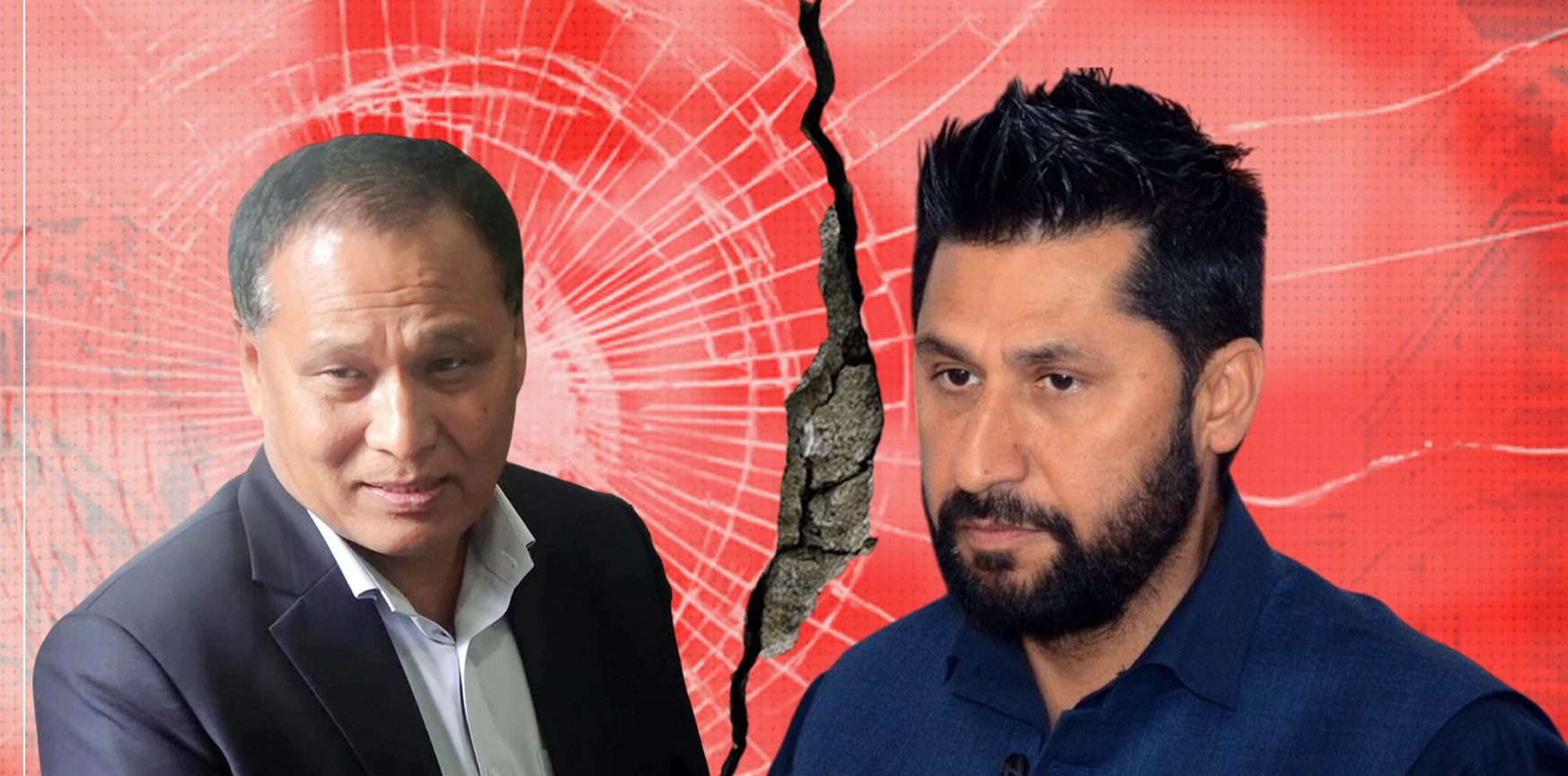
Kathmandu, January 10: The high-profile merger agreement between the Rastriya Swatantra Party (RSP) and the Ujyalo Nepal Party, mentored by Kulman Ghising, has collapsed just 12 days after it was signed. Following the preliminary agreement reached on December 29 (Poush 14), RSP Chairman Rabi Lamichhane briefed the party secretariat in a virtual meeting, stating that cooperation became impossible due to a constant stream of new demands.
During the meeting, Rabi stated: “Kulman brought something new to the table every single day. If one demand was met, another would appear the next day. Above all, the bargaining was focused primarily on personal gain and positions—asking ‘What is my share?’, ‘What will my role be?’, and ‘How many of my people will be placed where?'”
What happened after the agreement?
In the initial agreement on December 29, the proposal included:
- Appointing Kulman Ghising as the Vice-Chairman of RSP.
- Balendra Shah (Balen) leading the government.
- Rabi Lamichhane handling the party organization.
- Kulman was also to be given a major responsibility in transforming the Physical Infrastructure sector based on his expertise.
However, according to Rabi, Kulman continuously raised demands regarding:
- The number of Proportional Representation (PR) seats.
- Allocation of specific Direct Election constituencies.
- Appointments for the roles of Senior Vice-Chairman and General Secretary.
- Induction of more than 30 Central Committee members from his side.
Rabi claimed that even after Balen submitted names for the Central Committee to move the process forward, Kulman insisted on power-sharing, saying, “Let’s divide the PR seats individually.” Rabi reportedly responded by saying, “If the people are capable, let’s work without ‘yours’ and ‘mine’ distinctions,” but the conversation remained centered on “power and posts.”
After the collapse?
Following Rabi’s briefing, the RSP Secretariat decided not to endorse the agreement with Ujyalo Nepal. Secretariat member Shishir Khanal stated, “The December 29 agreement will no longer be implemented.”
On the other side, immediately after the merger failed, Kulman Ghising declared himself the Chairman of the Ujyalo Nepal Party. Previously, he served only as the party’s “Mentor,” while Anup Kumar Upadhyay was the Chairman.
According to Ujyalo Nepal spokesperson Raju Thapa, a Central Committee meeting held on Saturday at 4:00 PM appointed Kulman as Chairman. A press conference has been called for 6:00 PM to formally announce this decision.
Grievances from the Ujyalo Nepal Side
Some leaders of Ujyalo Nepal had demanded a change in the party name (e.g., Rastriya Ujyalo Party or Ujyalo Swatantra Party) and a modification of the election symbol. They argued, “How can we proceed by erasing our entire existence? RSP did not offer concrete terms.”
Ujyalo Nepal has 94 Central Committee members. While most leaders wanted to merge with RSP, some argued that “the party has already been branded and should move forward independently.”
Political Impact
This triangular collaboration (Rabi, Balen, and Kulman) had offered a dream of a “New Alternative,” but the dispute over positions and power-sharing has shattered that hope.
This event has further fragmented the alternative political front in Nepal. It sends a message that even the new parties are suffering from the same old diseases of the traditional ones—where unity collapses due to the greed for positions and personal ambition. It appears that RSP and Ujyalo Nepal will now compete under separate election symbols in the upcoming elections.
Rabi concluded, “I had taken the initiative to build a good party with Balen since I was in Nakkhu Jail, but in the end, we reached a point where we could not move forward together.”
प्रतिक्रिया