
 प्रदेश-१
 मधेस
मधेस बागमती
 गण्डकी
 लुम्बिनी
 कर्णाली
 सुदूरपश्चिम
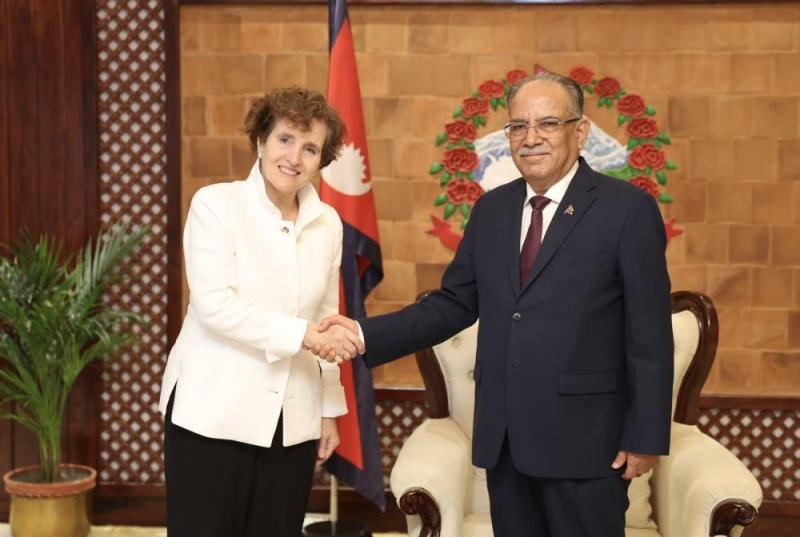
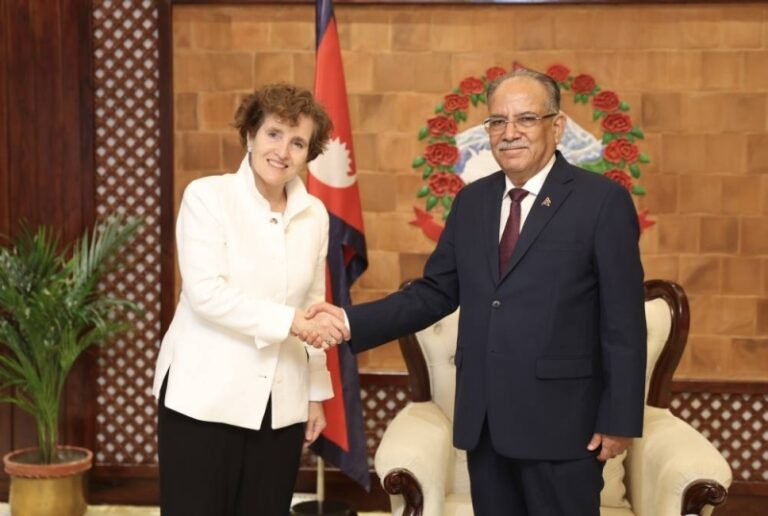
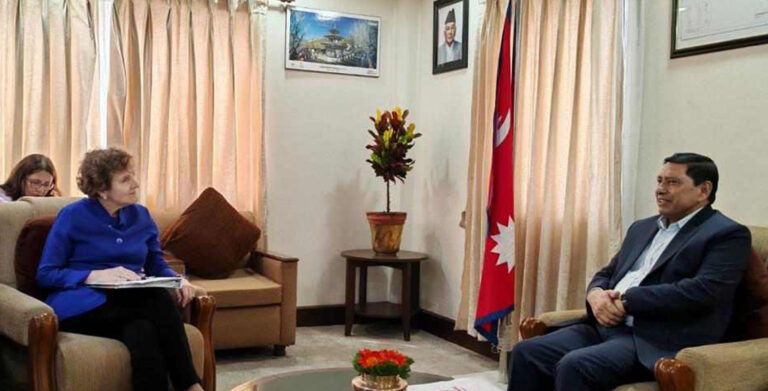
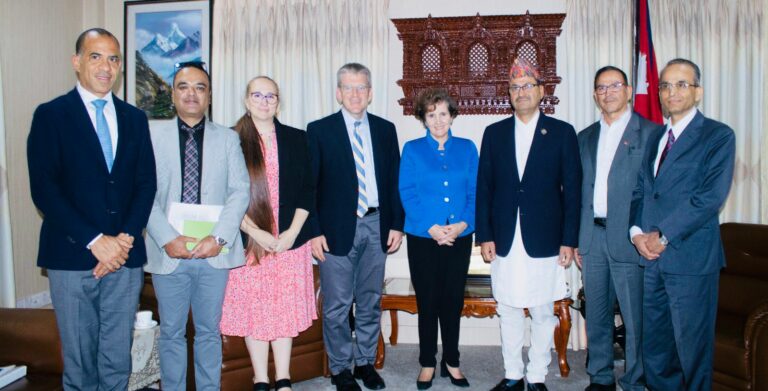
Kathmandu: American cooperation project Millennium Challenge Corporation (MCC) Executive Officer Alice Albright, who is currently in Nepal, has expressed optimism that MCC projects under the corporation will be completed within the stipulated time. She met with Prime Minister Pushpa Kamal Dahal ‘Prachanda,’ Chief of the main opposition party Nepal Communist Party (Maoist) Chairman K.P. Sharma Oli, and Nepali Congress President Sher Bahadur Deuba, Deputy Prime Minister and Home Affairs Nararayankaji Shrestha, Minister of Physical infrastructure and Planning Prakash Jwala among other top leaders, on Monday to Tuesday in Kathmandu.
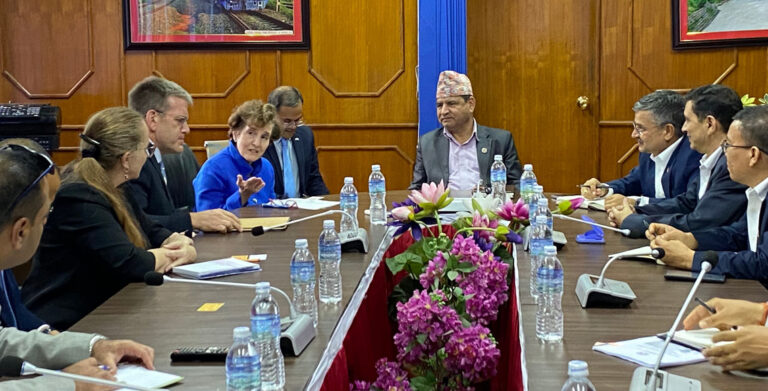
After the meeting with all the top leaders, Albright stated, “All the Prime Ministers and former Prime Ministers are in favor of the project. The project is progressing well. I am very enthusiastic after discussing with them, and I am optimistic that the project will be completed within the timeframe.”
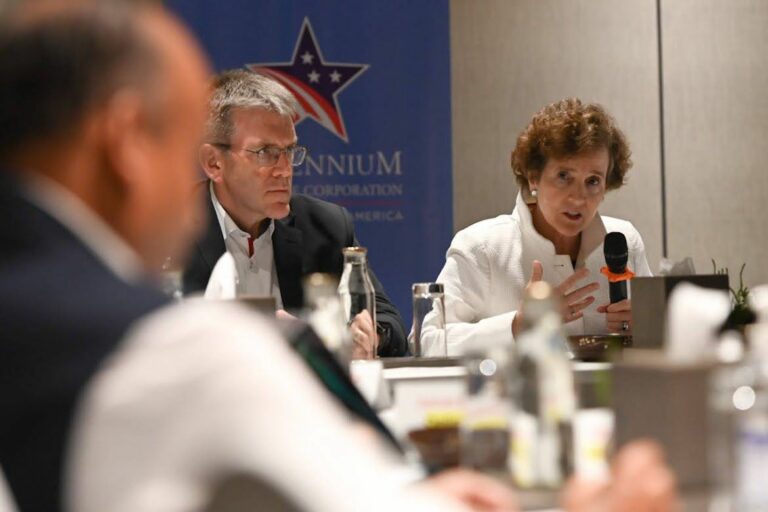
When passed by the MCC Parliament, the 12-point explanatory statement that we prepared received the approval of experts and was accepted by the principal executive officer, Albright.
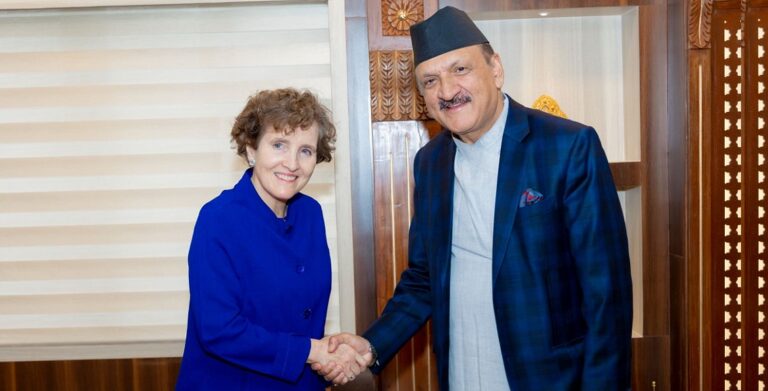
Albright, who arrived in Nepal on Sunday and held high-level political discussions on Monday- Tuesday, said, “Meeting with various government officials to expedite the project’s process was an important part of our discussions. We have experience completing MCC projects on time in various countries worldwide in the past 20 years. Even if there are challenges, the project in Nepal will also be completed on time.”


The MCC was approved by the Nepalese Parliament on 13th Bhadra (Nepali calendar date) and has been in operation since then. Dear R. Thomson, the US Ambassador to Nepal, said that the process of purchasing and contracting for MCC projects in Nepal had begun some time ago. He stated, “Nepal has started the tender process for a comprehensive and transparent examination of the project after conducting extensive studies. We have 4 years and 11 months to complete it. It will be done on time.”
Earlier, when MCC Nepal issued tenders for transmission line construction some time ago, they received tenders that were more than 61% higher in cost than estimated. MCC Nepal had estimated a cost of $22.6 million for the transmission line construction. However, the minimum amount mentioned in the recent bid was $36.59 million.
MCC Nepal had called for tenders for the construction of the Lapsifedi-Ratamate-New Hetuada 117 km, Ratamate-New Dumauli 90 km, and New Dumauli-New Butwal-New Butwal bordering Indian border 118 km transmission lines under Package 1, Package 2, and Package 3, respectively.
The total length of the transmission lines will be 315 kilometers, with a capacity of 400 kV. The environmental impact assessment showed that 2,12,000 trees will need to be cut down for the construction of 856 towers in the transmission line area.
The lowest bid for Package 1 is $13.15 million, while Package 2 has a minimum bid of $10.54 million, and Package 3 has a minimum bid of $12.90 million. Adding the minimum bids for all three packages amounts to $36.59 million.
MCC Nepal’s Chief Executive Officer Khadga Bisht claimed that there was no error in the design of the transmission line. He said, “The design of the transmission line was not wrong. It has been noted that when the entire cost is considered, there may be some issues. The difference between one tender and another is about $10 million.”
He also informed that they could revisit the tenders after discussing the matter. “The tender process may take longer, but it won’t be a problem to meet the deadline. We will place the tenders again after thorough discussions,” he said.
Jonathan Brooks, Deputy Vice President of MCC, mentioned that the problems seen in the current tenders are not new, saying, “This is not a completely new issue, only in Nepal. We are working to solve such issues in other countries as well.”
Brooks also added, “Nepal has shown substantial progress, and we are moving forward by addressing all the problems in the entire cost of transmission line construction. The difference in cost between one tender and another is not a new problem.”
He suggested that the problems seen in the current tenders can be resolved through reevaluation.

प्रतिक्रिया