
 प्रदेश-१
 मधेस
मधेस बागमती
 गण्डकी
 लुम्बिनी
 कर्णाली
 सुदूरपश्चिम

—Celebrating the 70th Anniversary of the Establishment of Diplomatic Relations between China and Nepal
Prof. Zhang Shubin, Director of Nepal Study Center, Hebei University of Economics and Business
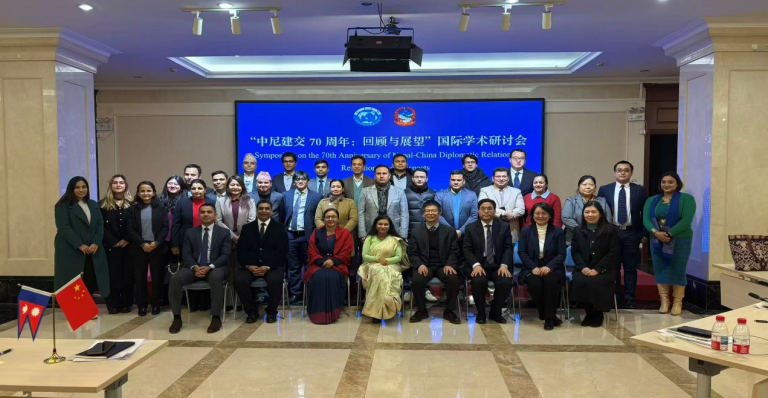
(Presented by the author at the Symposium on the 70th Anniversary of China-Nepal Diplomatic Relations: Reflections and Prospects, December 26, 2025.)

China and Nepal formally established diplomatic relations on August 1, 1955. Over the past 70 years, China-Nepal ties have achieved remarkable accomplishments and accumulated invaluable historical experience. Based on the historical trajectory and current realities of China-Nepal friendship, I believe the key historical lessons behind the success of bilateral relations can be summarized as follows.
1. Mutual Respect for Sovereignty and Territorial Integrity
China and Nepal have consistently adhered to the Five Principles of Peaceful Coexistence(Panchsheel), mutually respecting each other’s sovereignty, independence, and territorial integrity—laying a solid foundation for bilateral relations. Particularly on issues concerning core interests and major concerns, the two sides have always demonstrated mutual understanding and support, setting an exemplary model for harmonious coexistence between countries with different social systems and at different stages of development.
In 1960, China and Nepal signed the Sino-Nepalese Boundary Treaty, peacefully resolving their border disputes—a landmark example of peaceful settlement of boundary issues in the international community. On matters related to China’s core interests, such as Taiwan and Tibet, Nepal has always firmly upheld the One-China principle. The Nepali side has time and again reiterated that Xizang affairs are internal affairs of China, and that it will never allow any separatist activities against China on Nepal’s soil.
In return, China has consistently respected Nepal’s independence and territorial integrity and has always firmly supported Nepal in upholding its independence, sovereignty and territorial integrity, and respects and supports Nepal’s independent choice of political and social system, and development path that suit its national conditions.
October 7,1956 Joint Statement by Premier Zhou Enlai of the People’s Republic of China and Prime Minister Tanka Prasad Acharya of the Kingdom of Nepal. China and Nepal signed the first Agreement between China and Nepal on Economic Aid
Both the Joint Statement and the Economic Aid Agreement were signed on the basis of Panchsheel. It is the first time that China and Nepal to practice the Panchsheel. China committed to providing Nepal with unconditional economic assistance totaling 60 million Indian rupees within three years. A distinctive feature of this aid was that Nepal was granted full discretion in the use of the funds and supplied commodities. Ever since then, Panchsheel or the Five Principles of Peaceful Coexistence has always been the cornerstone for the friendship between the two friendly nations.
2. High-Level Exchanges of Visits Guiding Bilateral Relations
The leaders of both countries have maintained close interactions through mutual visits, meetings, and other forms of engagement, enhancing political mutual trust and providing strategic direction for the development of bilateral relations. These high-level exchanges have not only advanced practical cooperation but also strengthened friendship between the peoples of China and Nepal.
Visits to Nepal by Chinese leaders—including Premier Zhou Enlai, Vice Premier Deng Xiaoping, President Li Xiannian, President Jiang Zemin, President Xi Jinping, as well as Premiers Zhao Ziyang, Li Peng, Zhu Rongji, and Wen Jiabao—along with visits to China by Nepalese, Kings, Presidents and Prime Ministers have consistently injected vitality into China-Nepal friendship.
In April 2019, President Bidya Devi Bhandari of Nepal visited China to attend the Second Belt and Road Forum for International Cooperation, during which the China–Nepal railway project was included among the cooperation outcomes of the Belt and Road Initiative. In October of the same year, Chinese President Xi Jinping paid a state visit to Nepal—the first visit by a Chinese president in 23 years. During the visit, the two sides signed multiple cooperation agreements and elevated their bilateral relationship to a “Strategic Partnership of Cooperation Featuring Ever-lasting Friendship for Development and Prosperity.”
In September 2023, Nepali Prime Minister Pushpa Kamal Dahal (Prachanda) traveled to Hangzhou to attend the opening ceremony of the Asian Games and paid a visit to China. During the visit, the two sides signed more than ten bilateral cooperation documents covering trade and economy, agriculture, science and technology, culture, publishing, digital economy, green and low-carbon development, inspection and quarantine, and development assistance.
China and Nepal signed framework agreement to promote Belt and Road cooperation during Nepal PM KP Oli’s China visit in December 2024.
In September 2025, Nepali Prime Minister K.P. Sharma Oli visited China to attend the Shanghai Cooperation Organization (SCO) Summit and the commemoration events marking the 80th anniversary of the victory of the Chinese People’s War of Resistance against Japanese Aggression.
Following the “Generation Z” movement in Nepal on September 8–9, a transitional government was formed. Prime Minister Sushila Karki, during her meeting with Chinese Ambassador Chen Song, reaffirmed Nepal’s commitment to the One-China Principle and stated that Nepal would not allow any forces to use its territory to conduct activities against China.
History and reality have repeatedly demonstrated that, regardless of changes in the international or domestic landscape, China-Nepal friendship has remained steadfast.We look forward to Nepal’s general elections on March 5 next year, which we hope will lead to the formation of a new government committed to stability and development, the effective implementation of agreements signed between China and Nepal, and the translation of bilateral friendship into concrete cooperation—ultimately delivering tangible benefits to the peoples of both countries.
3. Practical Cooperation Benefiting the Peoples of Both Countries
China and Nepal have carried out extensive cooperation in areas such as infrastructure, trade, investment, energy, and tourism, providing significant support to Nepal’s socio-economic development and achieving mutual benefit and win-win outcomes.
A Nepali think tank invited me to write an article commemorating the 70th anniversary of the establishment of diplomatic relations between China and Nepal, and I summarized China’s assistance to Nepal in the piece.
During the period from 1956 to 1972, the volume of Chinese aid to Nepal amounted to USD 98.7 million. Consequently, by 1973, Nepal was ranked 11th among all recipient countries in terms of the aid received from China. Among South Asian nations, Nepal received the highest proportion of its aid from China in the form of grants (44%) during this period—nearly double the percentage for Pakistan (25%).
Total foreign aid to Nepal (excluding loans) from 1975 to 1980 stood at 262.38 billion rupees, with Chinese foreign aid accounting for 30.79 billion rupees (11.73% of the total).According to 1989 statistics, in the 26 years since the establishment of diplomatic relations, China undertook 42 economic aid projects in Nepal. Since the mid-1990s, China’s annual aid to Nepal has grown steadily from an initial 80 million yuan. During Premier Wen Jiabao’s 2012 visit, the annual grant was raised to 200 million yuan (from 150 million yuan), with an additional 750 million yuan over three years and 20 million US dollars for Nepal’s peace process, reaffirming support for its socio-economic development. In December 2014, oreign Minister Wang Yi announced a sharp increase in annual aid to 800 million yuan (13 billion Nepali rupees) during his Kathmandu trip. Nepal received USD 380.45 million as development assistance from China in the period 2016-17 to 2020-21, with China being the fourth-largest bilateral donor to Nepal.According to Nepal Ministry of Finance’s Development Partner Disbursements, FY 2012/13- FY 2022/23, China’ s Actual Disbursements (US$) to Nepal over the fiscal years 2010/11 to 2022/23, China’s total aid to Nepal reached US$608.03 million.
China is among the top ten development donors of Nepal. The volume of the aid to be floated by China to Nepal in the fiscal year 2014/15 stands at Rs.8.59 billion. China’s aid commitments grew from $19 million in 2010/11 to over$500 million by 2019/20.
4. People-to-People Exchanges Fostering Mutual Understanding
Exchanges between China and Nepal in the fields of education, culture, tourism, and healthcare have grown increasingly close. China has become a major source of tourists for Nepal and a preferred destination for Nepali students studying abroad, significantly enhancing mutual understanding and friendship between the peoples of the two countries.
On June 13, 2007, Hebei University of Economics and Business partnered with Tribhuvan University to establish Nepal’s first Confucius Institute in Kathmandu. Subsequently, Confucius Institutes were also set up at Tribhuvan University and Lumbini Buddhist University.
China assisted in building the BP Koirala Memorial Cancer Hospital in Nepal, and all members of the Chinese medical teams dispatched to Nepal have been medical experts from Hebei Province. Moreover, the post-earthquake reconstruction of the historic nine-story temple (BasantapurTower) in Kathmandu’s Durbar Square—supported by China—was undertaken by the Ancient Architecture Research Institute of Hebei Province.
The Nepal Study Center at Hebei University of Economics and Business is China’s first university-based institution dedicated exclusively to Nepal studies and was among the earliest regional and country-focused research centers officially registered with the Ministry of Education. To date, Chinese universities have established ten Nepal Research Centers. Hebei University of Economics and Business is also preparing to launch an Institute for Area and Country Studies, building upon its Nepal Study Center and other international research initiatives. All these efforts continue to inject strong momentum into the development of China-Nepal friendship.
5. Jointly Safeguarding Regional Peace and Stability
As neighboring countries linked by mountains and rivers, China and Nepal have maintained close communication and coordination on regional and international affairs. Both sides jointly oppose hegemonism and power politics, uphold the shared interests of developing countries, and have made positive contributions to regional peace and stability.
In 1956 – Only months after Nepal itself joined the UN, Foreign Minister Chuda Prasad Sharma told the General Assembly that both the PRC and Japan should be admitted, signalling Nepal’s pro-PRC stance from its very first UN speech. The view was reiterated by Nepal’s first elected prime minister B. P. Koirala at the 15th UN General Assembly in 1960. Similarly, late King Mahendra reinforced Nepal’s plead for rightful reentry of China while addressing the UN General Assembly’s special session in 1967.China was ultimately readmitted to the UN in 1971. King Mahendra’s remark that “Only the alternative to the United Nations is a stronger United Nations” was well hailed both in the UN corridor and beyond (Upadhyaya, 2022).
China was the first country to endorse Nepal’s 1975 proposal to declare the kingdom a “Zone of Peace.” 23 October 1975 – While hosting King Birendra in Beijing, Vice-Premier Chen Xilian publicly stated: “The Chinese Government and people will … firmly support His Majesty King Birendra’s just position of declaring Nepal a zone of peace.” When Comrade Deng Xiaoping paid an official goodwill visit to Nepal in February 1978, he publicly reaffirmed China’s support for King Birendra’s “Zone of Peace” proposal. Speaking at a banquet hosted by the Nepalese monarch, Deng stated:“The Chinese Government and people resolutely support the Nepalese Government and people in their just struggle to safeguard national independence and sovereignty, and we support His Majesty the King’s proposal to declare Nepal a zone of peace.”
India has economically blockaded Nepal for three times. China has consistently backed Nepal during the three Indian economic blockades. The first, in 1969, followed Kathmandu’s expulsion of India’s military mission and removal of 17 Indian check posts on the border with China (the check post at Kalapani (in the Darchula district) was never withdrawn). The second, from March 1989 to April 1990, was triggered by Nepal’s 1988 purchase of Chinese anti-aircraft guns. The third, 23 September 2015 – 8 February 2016, came after India argued Nepal’s new constitution under-represented marginalized border groups.Each time, China provided timely fuel, food, and medical supplies, cushioning the impact on Nepal.
6. Treat Each Other as Equals and Refrain from Interfering in Each Other’s Internal Affairs
Both sides have consistently treated each other as equals, respected each other’s chosen development paths, refrained from interfering in each other’s internal affairs, and thus set an exemplary model of mutual respect and equality between nations.
In the 1960s, China and Nepal had a dispute over the sovereignty of Mount Zhumulangma. Chairman Mao Zedong proposed a “half-and-half” solution, suggesting that the boundary line run directly across the summit, allowing both countries to share the mountain. Premier Zhou Enlai emphasized the need to “accommodate the national sentiments of both sides” and actively promoted friendly negotiations.
In 1961, the two countries signed the Sino-Nepalese Boundary Treaty, officially recognizing Mount Zhumulangma as a shared natural landmark. This agreement embodied the principles of equality, mutual benefit, mutual understanding, and mutual accommodation, and has since become a model for international boundary negotiations.
Far from leveraging its size to pressure a smaller neighbor, China actually ceded approximately 302.75 square kilometers of territory to Nepal—an act confirmed by Nepali scholars—as a gesture of goodwill and commitment to peaceful coexistence.
China’s assistance to Nepal has never been accompanied by political conditions. Since 1956, China has provided Nepal with repeated economic aid, including a commitment in 1960 to grant 100 million Indian rupees in interest-free assistance over three years. China has also offered long-term support for projects in infrastructure, education, healthcare, hydropower, and other sectors.
A core principle underpinning this assistance is that it carries no political strings attached, fully respecting Nepal’s sovereign right to independently choose its own development path. This approach stands in stark contrast to the practices of certain Western countries, which often tie aid to demands for democratic reforms or interfere in domestic affairs. China’s policy thus embodies the concrete practice of “non-interference in each other’s internal affairs.”
This approach clearly demonstrates China’s respect for Nepal’s sovereignty—refraining from leveraging its size or power to exert pressure, and instead seeking fair and mutually acceptable solutions through dialogue and cooperation.
Respect for Nepal’s Political System and Development Path
Nepal has undergone multiple transitions in its political system—from monarchy to republic, and then to a federal democratic republic—experiencing even civil conflict and changes of government. Throughout these transformations, China has consistently respected the Nepali people’s right to independently choose their own social system and development path. It has never publicly criticized Nepal’s internal affairs nor supported any specific political party or faction.
Following Nepal’s abolition of the monarchy and establishment of the Federal Democratic Republic in 2008, and again after the formation of an interim government in September 2025 following the Gen-Z-led movement, China promptly recognized the new authorities and continued to deepen bilateral cooperation.
This demonstrates that China’s principle of “non-interference in internal affairs” is not merely rhetoric, but a consistent and long-standing policy practice.
Nepal signed a Memorandum of Understanding on Belt and Road Initiative (BRI) cooperation with China in 2017, and further solidified this partnership by signing a comprehensive cooperation framework agreement in 2024. All projects—including the Jilong–Kathmandu railway, Pokhara International Airport, cross-border power grid connections, and others—have been jointly planned and agreed upon through equal consultation between the two sides.
China has never compelled Nepal to accept any project, nor has it used debt as a tool to exert political influence—a fact that directly contradicts the so-called “debt-trap diplomacy” narrative often amplified by certain Western media outlets.
This cooperation is fundamentally based on Nepal’s own proactive alignment of the BRI with its national development strategies, such as its vision to transform from a “landlocked” to a “land-linked” country, thereby reflecting genuine mutual respect.
The China-Nepal relationship is hailed as a “model of peaceful coexistence between countries of different sizes” precisely because China, as a major power, has always treated Nepal as an equal. On sensitive issues concerning sovereignty, political systems, and development paths, both sides have consistently adhered to the principles of non-interference and mutual respect. Their cooperation is grounded in voluntarism, mutual benefit, and win-win outcomes—not in imposing one’s will upon the other.
As Deng Xiaoping once remarked, “Mighty Mount Zhumulangma (i.e. Qomolanma /Sargatha) stands tall as a lofty symbol of China-Nepal friendship.” This mountain is not only a geographical boundary marker but also a spiritual monument embodying the Five Principles of Peaceful Coexistence jointly practiced by the two nations.
7. Jointly Addressing Challenges
Faced with shared challenges such as natural disasters such as earthquakes and floods, and Covid-9 pandemics, China and Nepal have supported each other and worked together to overcome difficulties, demonstrating genuine friendship forged through adversity.
Take the April 25, 2015 earthquake in Nepal for example, China has committed USD 483 million to support post-earthquake rehabilitation and reconstruction efforts. In addition to this substantial financial commitment, China provided an immediate grant of USD 10 million to Nepal in 2015 under the Post-Disaster Reconstruction Aid Project Plan. There are 25 reconstruction projects under China aid including roads, schools, hospitals and heritage sites, among others. The Nautalle Durbar (i.e. nine-story palace, or Basantapur Tower) at Kathmandu Durbar Square and Durbar High School are representative structures of post-earthquake reconstruction, along with other five schools in three districts of Nepal and one hospital in SindhupalchokDistrict.
Conclusion
As President Xi noted, China and Nepal are good friends sharing mutual respect and trust, good partners for mutually beneficial cooperation, good neighbors benefiting from people-to-people exchanges, and good brothers who always stand alongside each other. Let’s join hands for progress and prosperity, elevating China-Nepal Friendship to New Heights. We look forward to the day when Nepal shines as the Switzerland of South Asia, and Kathmandu stands proudly as the Brussels of the region, hosting SAARC. In that moment, Nepal will contribute even more powerfully to global peace and human development.

प्रतिक्रिया