
 प्रदेश-१
 मधेस
मधेस बागमती
 गण्डकी
 लुम्बिनी
 कर्णाली
 सुदूरपश्चिम
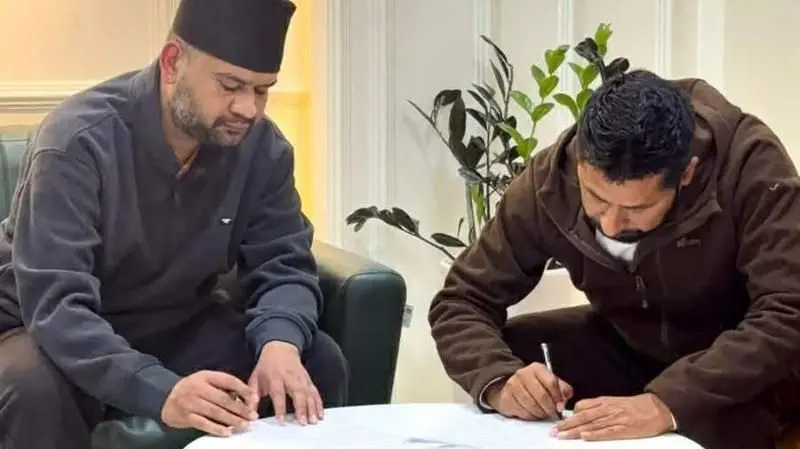
December 28, Kathmandu : The seven-point agreement between Rastriya Swatantra Party (RSP) Chairman Ravi Lamichhane and Kathmandu Mayor Balendra Shah (Balen), signed early Sunday, has generated significant interest in Indian media. Outlets highlight Balen’s projection as the future prime ministerial candidate, framing it as an extension of Nepal’s Gen Z movement and a boost for youth-backed alternative politics ahead of the March 5, 2026 elections.
Key Coverage Highlights:
- The Hindu prominently reported the pact, noting Balen (37) as the parliamentary leader and PM face, while Ravi retains chairmanship. It described the deal as reached after marathon talks, with the RSP (fourth-largest in the dissolved House) retaining its name, bell symbol, and flag. The article mentioned Ravi’s post-agreement statement emphasizing country needs over personal ambitions.
- Outlook India and The Print (PTI) echoed similar details, calling it a pre-poll alliance strengthening RSP with Balen’s urban youth appeal.
- Times Now and Tribune India focused on Balen’s rapper-turned-politician background and the alliance’s potential to challenge traditional parties.
Indian media views this as a consolidation of anti-establishment forces post-Gen Z protests, potentially attracting first-time voters. Some outlets note Balen’s past critical remarks on India-Nepal border issues and perceived Indian interference, but add that he has not similarly targeted China, presenting a balanced view.
Coverage remains factual and neutral, seeing the pact as a major realignment in Nepal’s fluid politics rather than a direct threat to bilateral ties. No major Hindi outlets like BBC Hindi, Navbharat Times, Amar Ujala, or Zee News had dedicated reports on the agreement as of now, though they extensively covered earlier Gen Z protests and Balen’s rise.
This development underscores growing Indian interest in Nepal’s youth-driven political shifts.
प्रतिक्रिया