
 प्रदेश-१
 मधेस
मधेस बागमती
 गण्डकी
 लुम्बिनी
 कर्णाली
 सुदूरपश्चिम
Kathmandu, December 19, In a triumph that surpassed even his own predictions, KP Sharma Oli has completed a hat-trick as Chairman of the Communist Party of Nepal (Unified Marxist-Leninist) – CPN-UML – at the party’s 11th National Convention. Facing longstanding accusations of stifling internal democracy and adopting an authoritarian style, Oli’s win was not just decisive—it was spectacular, revealing the extraordinarily deep roots of his influence within the party.
In an informal conversation during a pre-convention interview on ABC Television, Oli had privately expressed hopes for 65-70% support. The convention, however, delivered far more robust backing.
Oli secured 1,663 votes to complete his hat-trick. His rival, Ishwar Pokhrel – who contested with the backing of former President Bidya Devi Bhandari – received only 564 votes.
According to the UML Election Commission, out of 2,263 delegates, 36 were absent, meaning 2,227 participated in voting. Oli captured approximately 75% of these votes.
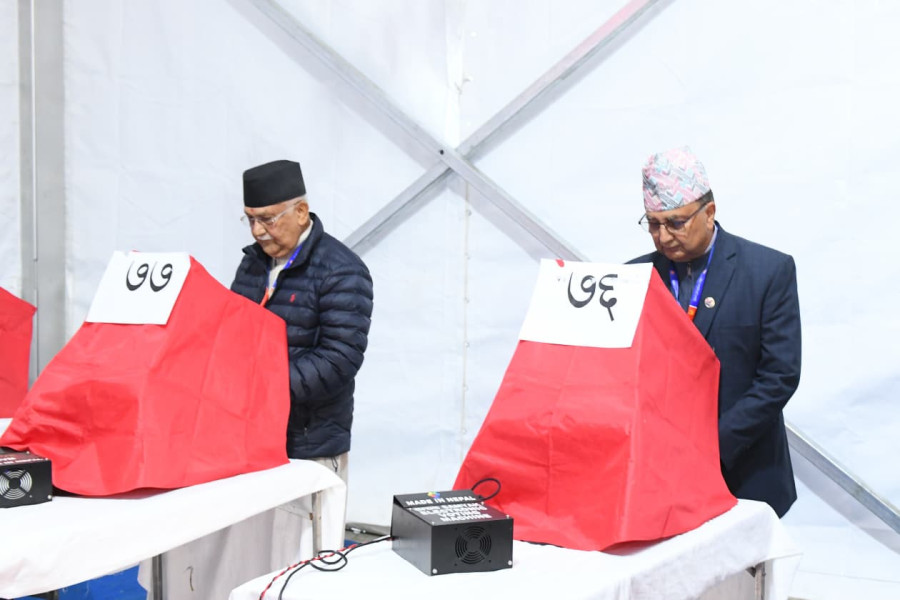
Both Oli and Pokhrel camps released separate panels (lists of office-bearers and central members) before voting, and delegates were even allowed to carry these panels into the booth for reference. Comparing these panels with the final 301-member Central Committee shows the opposing side in a strikingly weak position.
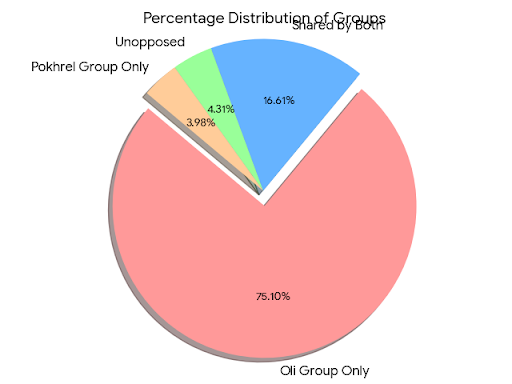
- 50 members (16.61%) were shared on both panels.
- 12 members (3.98%) succeeded exclusively from Pokhrel’s panel.
- 226 members (75.08%) were elected directly from Oli’s panel.
- 13 members (4.31%) were unopposed from various clusters (most aligned with Oli).
This data clearly establishes Oli’s faction’s unchallenged dominance in the new Central Committee—effectively over 80% when combining exclusive and shared members with unopposed allies.
In the 19 office-bearer positions, Oli’s grip is even tighter, though Vice-Chairmen like Bishnu Paudel, Prithvi Subba Gurung, and Raghubir Mahaseth do not always follow him unquestioningly in every context. The most vocal opposition voices appear to be Vice-Chairman Gokarna Bista and Deputy General Secretary Yogesh Bhattarai.
With Standing Committee and Politburo formed from the Central Committee, Oli’s allies are assured majority control there too, smoothing decision-making processes for him.
1. Chairman Election Results
- Total delegate voters: 2,263
- Participated in voting: 2,227 (36 absent)
- KP Sharma Oli: 1,663 votes (Winner)
- Ishwar Pokhrel: 564 votes (Defeated)
This margin reflects Oli’s solid base within the party. Held a year early amid crisis following the Gen-Z movement that toppled his government, the convention saw calls for leadership change—but Oli emerged validated through democratic process.
2. Group-wise Distribution in Central Committee (301 Members)
Comparing pre-convention panels with final results:
- Elected from Oli’s panel: 226 (75.08%)
- Elected from shared list: 50 (16.61%)
- Elected exclusively from Pokhrel’s panel: 12 (3.98%)
- Unopposed: 13 (4.31%)
This confirms clear majority (over 75%, effectively 80%+ with allies) for Oli’s group. His panel also dominates office-bearers (17 out of 19), ensuring influence in Standing Committee and Politburo.
Oli’s Comeback
After the Gen-Z movement in August 2025 ousted his government, questions arose even within the party about his leadership legitimacy. By advancing the convention, Oli tested himself democratically—and returned stronger.
One faction argued for supporting leadership in crisis; another pushed for change. Grassroots-selected delegates, however, trusted Oli, granting his panel overwhelming majority.
In the 10th Convention, Oli had majority too, but his style and decisions (e.g., delaying Bhandari’s membership renewal) swelled opposition. This time, delegates ensured not just continuity but ease of operations with heavy support for his team.
Oli’s Warning-Laden Closing Speech
At the convention’s closing ceremony, Oli framed his victory as both celebration and warning. Using language like “Just try touching the UML,” he sent a stern message to opposing forces—potentially aimed at critics inside and outside the party.
In the coming days, Oli’s influence on party policies and decisions will be even stronger. Despite Gen-Z impacts, he has proven his base solid. This convention adds new dimensions to debates on UML’s internal democracy: amid criticism of his style, the base chose him decisively—leaving the party’s future direction to be seen.
The voting, conducted over Wednesday and Thursday (December 17-18) in Kathmandu, saw Oli clinch 1,663 votes from delegates. His challenger, Ishwar Pokhrel – backed by former President Bidya Devi Bhandari – managed only 564. Of the 2,263 delegates, 36 were absent, leaving 2,227 to cast ballots.

Both camps released full panels ahead of the election. Cross-referencing these with the final 301-member Central Committee reveals Oli’s near-total control:
- 50 members (16.61%) appeared on both panels.
- 12 members (3.98%) were exclusive to Pokhrel’s panel.
- 226 members (75.08%) came exclusively from Oli’s panel.
- 13 members (4.31%) were elected unopposed.
This makeup signals Oli’s unchallenged reign in the new Central Committee. In the 19 office-bearer positions, Pokhrel’s panel won just two: Vice-Chairman Gokarna Bista and Deputy General Secretary Yogesh Bhattarai. Standing Committee and Politburo formations will follow suit, ensuring Oli loyalists dominate.
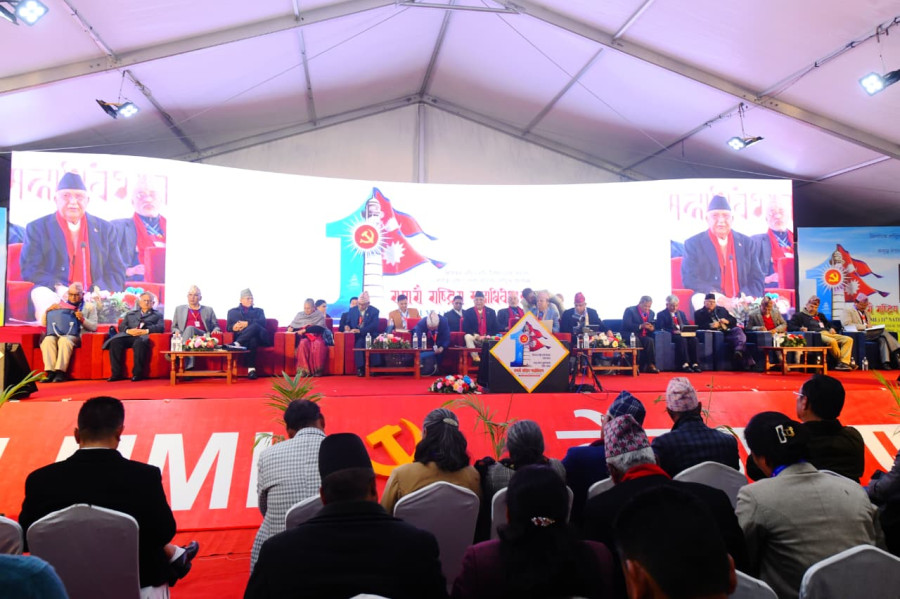
The convention, advanced by a year in response to questions raised after the Gen-Z movement toppled Oli’s government, tested his legitimacy. One faction urged solidarity in crisis; another demanded change. Delegates chose continuity, handing Oli not just the chair but a streamlined machine for governance.
At the closing ceremony on Thursday, an emboldened Oli warned adversaries: language akin to “Just try touching the UML” – a clear message of defiance.
Even in the 10th Convention, Oli held a majority, but his style and decisions (like delaying Bhandari’s membership) swelled opposition ranks. This time, grassroots delegates reaffirmed faith, prioritizing smooth operations under his team.
Full Composition of the New Central Committee
Oli Panel (226 Elected Members):
- KP Sharma Oli
- Bishnu Prasad Paudel
- Ram Bahadur Thapa ‘Badal’
- Prithvi Subba Gurung
- Raghuji Pant
- Shankar Pokhrel
- Lekhraj Bhatta
- Raghubir Mahaseth
- Khagaraj Adhikari
- Chhabilal Bishwakarma
- Padma Kumari Aryal
- Bhanubhakta Dhakal
- Mahesh Basnet
- Yamlal Kandel
- Rajan Bhattarai
- Sher Dhan Rai
- Hikmat Kumar Karki
- Achyut Prasad Mainali
- Aman Maskey
- Ashok Byanju
- Rishikesh Pokhrel
- Chakra Bahadur Malla
- Pathansingh Bohara
- Yagya Bahadur Bogati
- Liladhar Bhatta
- Sahadev Bogati
- Govinda Giri
- Kamala Oli
- Bhagirathi Singh
- Lila Kumari Bhandari
- Dal Phadera
- Nawaraj Rawat
- Bishnu Rijal
- Rudra Bahadur Shahi
- Indira Kumari Panthi
- Mina Singh Rakhal
- Khadka Bahadur Khadka
- Gopal Rana
- Ghanshyam Pandey
- Narayan Prasad Acharya
- Bhumishwar Dhakal
- Krishna Bahadur Thapa
- Kedar Sigdel
- Til Bahadur Mahat Chhetri
- Ramsharan Basnet
- Hari Krishna Shrestha
- Nawaraj Ojha
- Manju Sharma Chalise
- Keshavraj Pandey
- Khemprasad Lohani
- Rameshwar Rana
- Samik Kumar Badal
- Hasta Bahadur Pandit
- Nisha Adhikari
- Prabha Baral
- Binda Dhungana
- Ekwal Miyan
- Tarakanth Chaudhary
- Manoj Kumar Khadka
- Rajkumar Lekhi
- Hari Prasad Upreti
- Mubin Alam
- Aarti Bhandari
- Kalpana Kumari Katwal
- Nirmala Devkota
- Indra Prasad Bhandari
- Jivan Ghimire
- Manbir Rai
- Ram Rana
- Romanath Oli
- Kshitij Thibe
- Manju Bhandari
- Mina Pokhrel
- Menka Kafle
- Ganesh Dulal
- Prem Kumar Parajuli
- Ramesh Badal
- Rameshwar Phuyal
- Hari Krishna Byanjankar
- Sunita Dangol
- Rant Gurung
- Sujita Shakya
- Thaneshwar Prasad Basyal
- Aindra Sundar Nemwang
- Dr. Ajay Kranti Shakya
- Amil Lama
- Ekalal Shrestha
- Gokul Prasad Ghartimagar
- Govinda Pun
- Chandra Prakash Gharti
- Chandra Mohan Gauchan
- Til Kumar Menyangbo Limbu
- Prem Tamang
- Rajendra Kumar Rai
- Lil Bahadur Thapa Magar
- Bishmalal Adhikari Danuwar
- Subas Karmacharya
- Manoj Tamli
- Samrat Gauchan
- Asharatna Jagebu
- Tham Maya Thapa
- Ajay Kumar Gupta
- Upendra Prasad Shah
- Umashankar Agariya
- Kundan Prasad Kushwaha
- Ganga Prasad Yadav
- Jagdish Prasad Kushiyat
- Dilip Kumar Agrawal
- Ramchandra Mandal
- Vijay Kumar Sarawagi
- Saroj Kumar Yadav
- Jwala Kumari Shah
- Sarita Kumari Giri
- Afilal Okheda
- Govinda Bahadur Nepali
- Jang Bahadur Nepali
- Dan Singh Pariyar
- Prabhu Hajara Dusadh
- Bom Bahadur Bishwakarma
- Manohar B. Poudel
- Nita Ghatani
- Asha Kumari B.K.
- Dokmani Rana Baraili
- Bishnu Maya B.K.
- Krishna Tharu
- Narulal Chaudhary
- Balbir Prasad Chaudhary
- Shanta Chaudhary
- Jalil Miyan
- Mohammad Harun Haluwai
- Mohammad Samir
- Janak Chaudhary
- Bholanath Pokhrel
- Nagendra Shahi
- Sanjay Thapa
- Ain Bahadur Mahar
- Kiran Gurung
- Krishna Kumar Shrestha (Kisan)
- Krishna Prasad Adhikari
- Khim Bahadur Thapa
- Khimlala Bhattarai
- Khem Man Khadka
- Ganesh Singh Thagunna
- Girdhari Lal Neupane
- Gorkha Bahadur Bogati
- Govinda Thapa
- Chintan Pathak
- Chetanarayan Acharya
- Jagat Bahadur Bishwakarma
- Jagannath Thapaliya (J.N.)
- Jitu Gautam
- Jivan Gautam
- Jhapta Bahadur Bohara
- Tulsi Prasad Neupane
- Dadhiram Neupane
- Dal Rawal
- Damodar Bhandari
- Dipak Karki
- Devi Prasad Gyawali
- Devendra Dahal
- Niraj Acharya
- Padam Giri
- Parshuram Basnet
- Parvat Gurung
- Pradeep Kumar Katwal Chhetri
- Pradeep Gyawali
- Balram Adhikari
- Dr. Bhishma Adhikari
- Bhumi Tripathi
- Mahesh Kumar Bartaula
- Madhav Prasad Dhungel
- Min Bahadur Shahi
- Yagya Raj Sunuwar
- Yam Bahadur Pariyar
- Rabindra Adhikari
- Rashmi Acharya
- Rajiv Pahari
- Rajendra Prasad Gautam
- Lal Bahadur Thapa
- Lalbabu Pandit
- Lilanath Shrestha
- Bishal Bhattarai
- Sher Bahadur Tamang
- Surya Dhakal
- Dr. Surya Prasad Pathak
- Surya Bahadur Thapa Chhetri
- Hom Bahadur Thapa
- Asmita Thapa
- Urmila Sunuwar
- Elisa Gautam
- Kamala Bohara
- Komal Oli
- Kranti Burlakoti
- Gita Karki
- Jal Barsha Rajbanshi
- Dr. Tika Dhakal
- Tuka Hamal
- Nirudevi Pal
- Nirmala Pathak
- Parvati Rawal
- Prabha Koirala
- Bindu Maharjan
- Bimla Bik
- Bhagwati Neupane
- Man Kumari Jisi
- Yashoda Rimal
- Basanti Adhikari
- Binadevi Rai
- Sakuntala Shrestha
- Shilpa Nirala Karki
- Shiv Kumari Chaudhary
- Shobha Gyawali
- Sakuntala Lepcha
- Santana Dahal
- Santosh Kumari Sharma Thapa
- Saraswati Chidi
- Sarita Bhusal
- Sarita Bhusal Khanal
- Sita Sigdel Neupane
- Sita Kumari Sundas
- Sita Subedi
- Sunita Baral
- Surya Kumari Shrestha
- Sushila Nepal
- Gyanu K.C.
- Ushakala Rai
Pokhrel Panel (Exclusive – 12 Members in Central committee):
- Gokarna Bist*
- Yogesh Bhhattarai*
- Ishwar Pokhrel*
- Agniprasad Kharel -(His loyalty to Oli)
- Anand Prasad Pokhrel
- Karna Bahadur Thapa*
- Krishna Gopal Shrestha
- Gokul Prasad Baskota
- Jhapta Bahadur Rawal
- Thakur Prasad Gaire*
- Rachana Khadka*
- Binda Pandey .*
openly claimed opposition Group*
Shared in Both Panels (50 Elected Members):
- Jit Bahadur Malla
- Dambar Bahadur Singh
- Mohan Maya Dhakal
- Kalpana Chapagain
- Sima Kumari Chhetri
- Nir Kumari Kunwar (Niru Darlami)
- Bina Kumari Shrestha
- R.C. Lamichhane
- Shyam Kumar Basnet
- Bhagwati Thapa Chhetri
- Hemraj Rai
- Naradevi Pun
- Bhumika Limbu Subba
- Manjudevi Gurung
- Man Kumar Titung
- Savitra Rana
- Munisah Sudi
- Lakhandas Tatma
- Hari Narayan Mahato
- Juli Kumari Mahato
- Pratiksha Tiwari
- Ram Rati Devi Ram
- Savita Yadav
- Parvati Bishunkhe
- Kriparam Rana
- Gaurishankar Chaudhary (Tharu)
- Manju Kumari Chaudhary
- Mohammad Kaish
- Binod Shrestha
- Dr. Birendra Raj Sharma Pokhrel
- Kiran Gurung
- Krishna Bhakta Pokhrel
- Jamindra Man Ghale
- Raj Bahadur Budhathoki
- Shobhiyat Dhakal
- Suhang Nemwang
- Aarti Paudel
- Gita Adhikari
- Dolma Tamang
- Tara Sanjel
- Devka Pahari
- Padma Khadka
- Balika Kumari Giri
- Bimla Aryal
- Bhagwati Chaudhary
- Bharti Pathak
- Radhika Khatiwada
- Ram Kumari Jhankri
- Lakshmi Chhetri
- Bina Gyawali
Unopposed Elected (13 Members):
- Lilamani Gautam
- Gumadevi Acharya
- Menka Kumari Pokhrel
- Shantidevi Dhakal
- Amar Kumar Yadav
- Raunit Shah
- Sajida Khatun Siddiqui
- Kamala Devi Tamang
- Sita Lama
- Badami Kwari Budha Bohora
- Hari Prasad Ghimire
- Naresh Rokaya
- Sushil Kumar Thapa
This outcome fortifies Oli’s position, clearing the path for decisive action within the party and beyond. As Nepal heads toward national elections, the UML – under Oli’s iron grip – stands poised as a formidable force once more.
प्रतिक्रिया