
 प्रदेश-१
 मधेस
मधेस बागमती
 गण्डकी
 लुम्बिनी
 कर्णाली
 सुदूरपश्चिम
Kathmandu Dec 18: In the context of Nepal’s CPN-UML (Unified Marxist-Leninist) party’s 11th General Convention (held December 13-17, 2025, in Bhaktapur and Kathmandu), “cross-voting” refers to delegates casting votes across competing panel lines rather than strictly adhering to one faction’s full slate of candidates. This practice emerged as a key dynamic during the leadership election, reflecting internal tensions, desires for balance, and strategic maneuvering.
Background
- The convention featured a rare open contest for the chairperson position between incumbent KP Sharma Oli(seeking a third term) and senior vice-chair Ishwar Pokhrel.
- Both leaders formed rival “panels” (full lists of candidates for 19 office-bearer positions and 301 central committee members).
- 2,263 delegates voted using electronic machines at Bhrikutimandap, a process that took longer than expected (often 30-60 minutes per voter, with some up to 2 hours) due to the large number of candidates and deliberate selections.
- The convention was advanced by a year, partly influenced by the 2025 Gen-Z protests that ousted Oli’s government, heightening calls for internal reform and generational change.
Why Did It Happen?
Cross-voting (often called “Mat cross” in Nepali reports) involves delegates mixing votes: supporting one panel’s candidate for chairperson (typically Oli, seen as having “no alternative”) while selecting candidates from the opposing panel for lower positions like vice-chair, general secretary, deputies, secretaries, or central members.
Key Drivers:
- Quest for Party Unity and Balance: Many delegates expressed concern that full dominance by Oli’s panel could lead to one-sided decision-making and marginalization of dissenters. Oli’s style was criticized as “harsh” or “uncompromising,” prompting voters to create “check and balance” by ensuring representation from both sides. Delegates reportedly said things like: “If we don’t balance it, the party might become unlivable for some.”
- Dissatisfaction Within Oli’s Camp: There was notable unrest in Oli’s faction. Leaders like Bishnu Paudel and Pradeep Gyawali were unhappy with Oli’s choices (e.g., repeating Shankar Pokhrel as general secretary despite perceived “average” performance). Some Oli loyalists switched sides or contested independently, opening the door for cross-votes.
- Ideological and Generational Shifts: Delegates fell into three broad categories:
- Long-time Pokhrel associates pushing for change.
- Adherents to the party’s foundational “Madan Bhandari line” favoring unity.
- Newer recruits loyal solely to Oli. The first two groups were more inclined to cross-vote for a “mixed” leadership to keep the party “one unit.”
- Tight Races Encouraging Strategy: The general secretary race (Shankar Pokhrel vs. Surendra Pandey) was seen as the closest, with regional discontent (e.g., from Sudurpaschim, Madhesh provinces) against Shankar potentially leading to cross-votes benefiting Pandey. Neutral or “swing” votes (estimated 10-18%) could further amplify cross-voting impacts.
From the Ground:
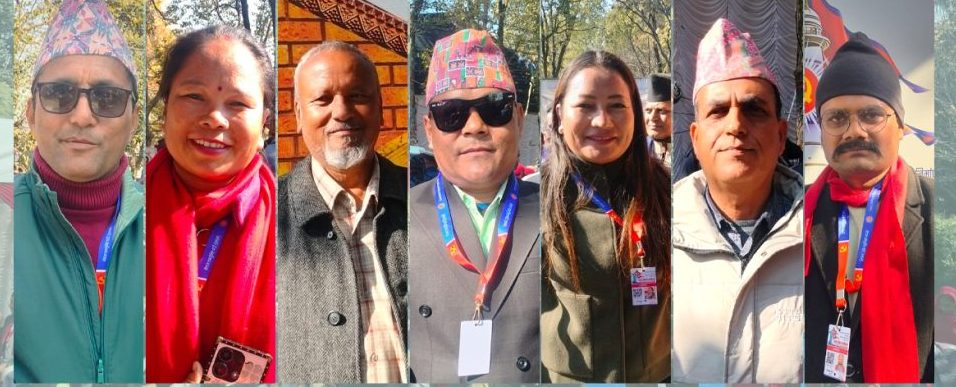
- Over 100 delegates interviewed during voting reported using both panels’ lists to select candidates carefully, explaining the prolonged voting times.
- Pokhrel’s camp was optimistic about winning 6-9 office-bearer positions, most probably only 2 position, attributing this to positive “mood” and cross-support.
- Even some Oli supporters acknowledged possible mixing, though they downplayed it as non-decisive.
Potential Impacts
- Mixed Leadership: If cross-voting was widespread (as ground reports suggested), the new central committee and office-bearers likely included representatives from both panels, promoting “collective leadership” as Pokhrel advocated.
- Signal of Reform: This dynamic reflected broader pressures from the Gen-Z movement, pushing the party toward internal democracy rather than one-person rule.
- Contrast with Past Conventions: UML conventions often featured consensus or landslide panel wins; this one showed more fragmentation, similar to past splits but contained within the election process.
प्रतिक्रिया