
 प्रदेश-१
 मधेस
मधेस बागमती
 गण्डकी
 लुम्बिनी
 कर्णाली
 सुदूरपश्चिम
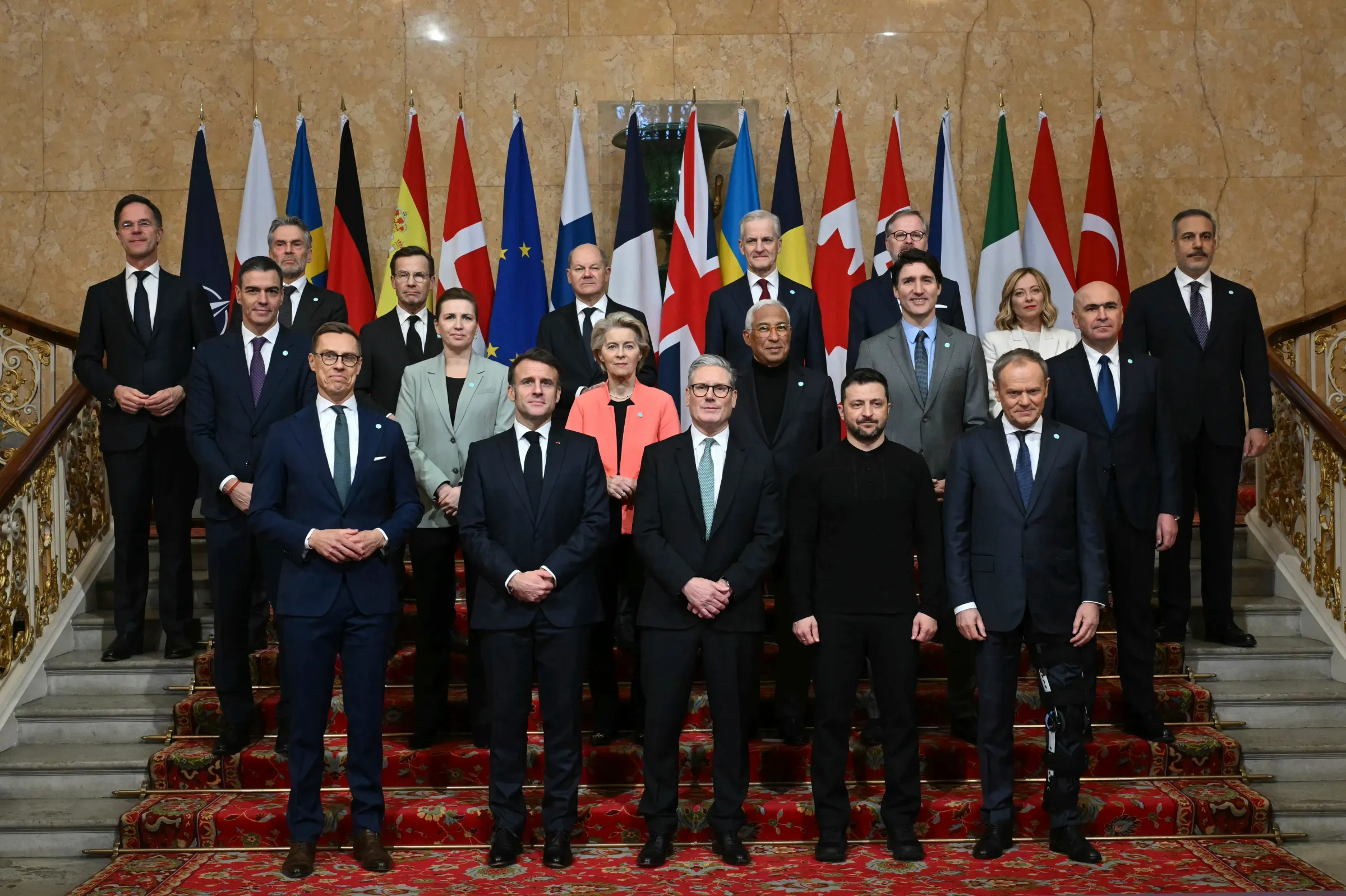
Announcement of the ‘Coalition of the Willing’
Kathmandu, March 3 – Ukrainian President Volodymyr Zelensky, following a devastating meeting with U.S. President Donald Trump on Friday, described it as “best left in history” and moved forward with discussions. After leaving the Oval Office, he proceeded directly to Fox News’ studio and then to London. The Ukraine Summit in London was already scheduled for March 2. In front of European leaders, Zelensky reiterated Ukraine’s readiness to sign the mineral agreement. Likely influenced by the British Prime Minister’s advice, he expressed hope for “constructive” negotiations with the U.S. administration in the next steps.
Speaking to journalists after 72 hours of intense activity, historic tension, and confrontation, Zelensky reaffirmed that Ukraine would not accept giving up any occupied territories to Russia and emphasized that Russia is the aggressor in this conflict—a stance that U.S. President Donald Trump and Russian President Putin might not appreciate.
The meeting had been overshadowed by the extraordinary scolding. Starmer used the opportunity as part of his broader effort to bridge the gap between Europe and the U.S. and also salvage what had seemed like the start of a peace process before Friday’s spat.
Starmer said he had worked with France and Ukraine on plan to end the war and that the group of leaders — mostly from Europe —had agreed on four things.
The steps toward peace would: keep aid flowing to Kyiv and maintain economic pressure on Russia to strengthen Ukraine’s hand; make sure Ukraine is at the bargaining table and any peace must ensure its sovereignty and security; continue to arm Ukraine to deter future invasion
Zelensky expressed hope that the UK-French initiative for peace would yield results “in the coming weeks.” His comments came after French President Emmanuel Macron proposed the idea of a one-month limited ceasefire. The proposed one-month ceasefire would apply to attacks in the air, at sea, and on critical energy infrastructures, while leaving ground attacks open.
British Prime Minister Keir Starmer previously announced a new 1.6 billion pound financial agreement with Ukraine, which will allow the purchase of “more than 5,000 air defense missiles” for defense against Russia. He concluded the London Summit with European, Turkish, and Canadian leaders.
Starmer outlined a plan to form a “coalition of the willing” to enforce a potential peace agreement in Ukraine, describing it as a group “ready to support it with boots on the ground and planes in the air, alongside others.”
NATO Secretary-General Mark Rutte reiterated the longstanding call for NATO countries to increase defense spending. He urged the media to “stop speculating about what the United States can or cannot do,” emphasizing America’s commitment to NATO.
Polish Prime Minister Donald Tusk claimed that the EU’s plans, to be made public next week, would send a “clear signal to Putin and Russia that no one in the West intends to surrender to his blackmail or aggression.”
European Commission president Ursula von der Leyen emerged from the meeting and said she would present a plan to “rearm Europe” to bolster the bloc’s security after a long period of under investment.
As for the future of war-torn Ukraine, von der Leyen said it needs security guarantees.
“We have to put Ukraine in a position of strength, so that it has the means to fortify itself and to protect itself,” von der Leyen said. “It’s basically turning Ukraine into a steel porcupine that is indigestible for potential invaders.
Canadian Prime Minister Justin Trudeau, as reported by The Guardian, detailed Zelensky’s emotional presentation on Friday in the Oval Office, where he stated in many words that “Vladimir Putin is a liar and a criminal, and cannot be trusted to keep any promise in any way.”
The Czech Republic has indicated it could increase defense spending to 3% of GDP. Czech Prime Minister Petr Fiala, in a video update following today’s summit, mentioned plans to raise the country’s defense spending to 3% of GDP, up from the current 2.1%.
Following the London Summit of European leaders, Prime Minister Keir Starmer stated that a “coalition of the willing” would be formed to defend Ukraine, but he did not specify the countries expected to participate.
Starmer’s Commitment to Form a ‘Coalition of the Willing’ to Help Ukraine
British Prime Minister Keir Starmer announced he would collaborate with other European leaders to develop a plan to end the war in Ukraine. He believes this effort will secure the support of U.S. President Trump.
“Through my discussions in recent days, we’ve agreed that the U.K., France, and other countries will work with Ukraine on a plan to stop the fighting. Then we’ll discuss that plan with the United States and move forward together. We will go further to develop a ‘coalition of the willing’ to defend a deal in Ukraine and guarantee peace. The U.K. is prepared to back this with boots on the ground and planes in the air, together with others. Europe must shoulder the heavy burden. But to support peace on our continent and succeed, this effort must have strong U.S. backing,” Starmer stated during a press conference after the meeting with European leaders.
In response to a reporter’s question, “Do you really think you need the U.S., and if so, do you think the ‘coalition of the willing’ will be enough to bring President Trump back around? Thank you,” Starmer said:
“Firstly, regarding last Friday, no one wanted to see what happened last Friday. But I do not accept that the U.S. is an unreliable ally. The U.S. has been a reliable ally to the U.K. for many decades and continues to be. There are no two countries as closely aligned as our two nations, with our defense, security, and intelligence intertwined in a way no other two countries are. I spoke with President Trump last night. I won’t go into the details of that conversation, but I wouldn’t be taking this step down this path if I didn’t believe it would yield a positive outcome in ensuring that Ukraine, Europe, the U.K., and the U.S. move together toward lasting peace. We are at a crossroads in history today. This is not a moment for more talk. It’s time to act, time to step up and lead, and time to unite around a new plan for just and enduring peace.”
“Declaring that ‘we are at a crossroads in history,’ British Prime Minister Keir Starmer expressed hope that European countries would increase their military spending and form a ‘coalition of the willing’ to defend Ukraine against Russia.”
Other European leaders emerging from the London Summit stated that the European Union would begin a significant increase in military spending.
European Commission President Ursula von der Leyen said the European Union would present a plan for this on Thursday, describing it as turning the country into “a steel porcupine that is indigestible for potential invaders.”
French President Emmanuel Macron proposed that his country and Britain would suggest a one-month ceasefire between Russia and Ukraine “in the air, on the seas, and in energy infrastructures.” He added that European countries should aim to spend approximately 3 to 3.5% of their GDP on defense, a target NATO plans to set at its next summit this summer.
The London Summit gained greater urgency after Zelensky’s heated meeting with Trump and Vice President JD Vance in the Oval Office on Friday, raising fears that the United States might pressure Ukraine’s president into a peace deal.
At the summit, Starmer, with Zelensky beside him, told the gathered leaders: “We are gathered here today because this is a once-in-a-generation moment for Europe’s security, and we all need to step up. Achieving a good outcome for Ukraine is not just a matter of right and wrong; it’s vital for the security of every nation here and many others as well.”
Starmer said that European leaders agreed at the summit to keep military aid flowing to Ukraine, maintain economic pressure on Russia, ensure Ukraine’s sovereignty and security, and form a “coalition of the willing” to monitor any ceasefire. “Those willing will intensify planning now with real urgency,” he said.
Starmer’s call to his 18 fellow leaders to shoulder the heavy burden for their security came two days after a crisis in U.S. support.
Following the Oval Office spectacle, European leaders have rallied behind Ukraine and praised its embattled President Volodymyr Zelensky.
U.S. Secretary of State Marco Rubio has consistently criticized Zelensky’s behavior in the Oval Office and, in an interview on ABC’s “This Week” on Sunday, accused him of “seeking every opportunity to ‘Ukraine-splain’ on every issue.” He expressed bewilderment at the pushback against the Trump administration, saying the president was unfairly criticized for trying to help Ukraine by stopping the war. “The sooner people understand and mature about this, I think the more progress we’ll be able to make,” he said.
London-Ukraine Summit Participants, March 2, 2025
- Keir Starmer – Prime Minister of the United Kingdom: Host
- Volodymyr Zelensky – President of Ukraine
- Emmanuel Macron – President of France
- Olaf Scholz – Chancellor of Germany (acting role post-election)
- Giorgia Meloni – Prime Minister of Italy
- Donald Tusk – Prime Minister of Poland
- Justin Trudeau – Prime Minister of Canada
- Pedro Sánchez – Prime Minister of Spain
- Mette Frederiksen – Prime Minister of Denmark
- Jonas Gahr Støre – Prime Minister of Norway
- Alexander Stubb – President of Finland
- Ulf Kristersson – Prime Minister of Sweden
- Petr Fiala – Prime Minister of the Czech Republic
- Klaus Iohannis – President of Romania
- Mark Rutte – NATO Secretary-General
- Ursula von der Leyen – President of the European Commission
- António Costa – President of the European Council
- Hakan Fidan – Foreign Minister of Turkey

प्रतिक्रिया